Smoothing Panel vs Compression: What Is Actually Different
Quick Answer: A smoothing panel is a fabric construction that spreads and softens surface contours — it changes how the fabric sits, not how hard it squeezes. Compression is measured, graduated pressure intended to support tissue and reduce movement. Smoothing is a look; compression is a mechanical effect. Most retail leggings labelled ‘compression’ are actually firm smoothing, and that is fine as long as you buy for the job you want done.
One product page. Both words. Very different garments.
Here is how to tell which one you are actually holding.

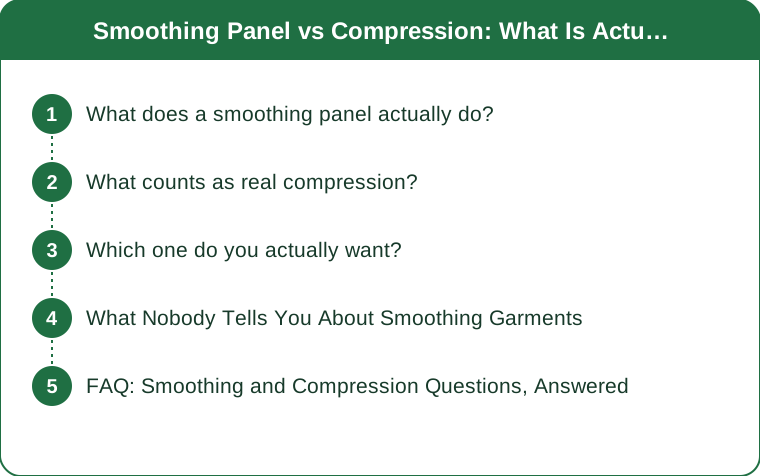
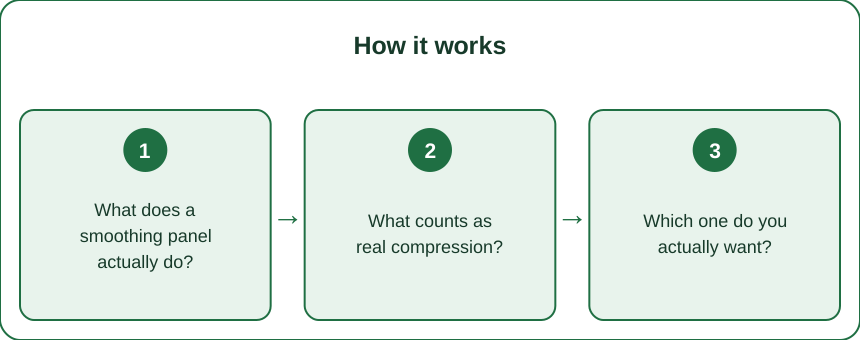
What does a smoothing panel actually do?
It manages surface transitions rather than shape.
A smoothing panel is typically a section of denser, higher-recovery fabric — often a double-layer or a bonded panel — placed across the front waist and lower abdomen. Its job is to prevent the fabric from showing every contour underneath it, in three ways.
It distributes edge pressure. A single-layer waistband concentrates its grip along a narrow line, which creates the visible ridge above and below it. A wider panel spreads that same holding force over 15-20cm of surface, so no single line digs in.
It adds opacity and body. Thicker, denser fabric drapes rather than clings, which is most of why a smoothing panel looks smoother — you are seeing less of what is underneath, not a changed shape.
And it resists rolling. Fabric rolls at the top edge when the tension above and below the edge is unequal. A panel with consistent tension across its height simply has less reason to fold over.
What it does not do: apply meaningful sustained pressure, change circumference in any lasting way, or provide muscular support during training.
What counts as real compression?
Measured pressure, usually graduated, expressed in mmHg.
Medical-grade compression garments are specified by pressure at defined points — for example higher at the ankle, decreasing up the leg — because the physiological effect depends on that gradient. That is a manufacturing specification, not a marketing word.
Athletic ‘compression’ sits in a much looser category. Most sports compression tights apply real but unspecified pressure, and the research on performance benefit is genuinely mixed. Where evidence is more consistent is in perceived muscle soreness and comfort during and after activity, and in reduced muscle oscillation during high-impact work.
Three practical markers of true compression wear:
- It states a pressure or a compression class, or at minimum specifies graduated compression by zone.
- It is sized by measurement, not S/M/L alone. Pressure depends on circumference, so real compression sizing asks for your actual numbers.
- It is uncomfortable to wear all day. That is the honest tell. Sustained pressure is a training and recovery tool, not loungewear.
If a garment is comfortable for eight hours at a desk, it is smoothing, whatever the label says.

Which one do you actually want?
Depends entirely on the job.
Want a clean line under a fitted top for a workday? Smoothing. Look for a wide bonded front panel, high rise, and a fabric with body rather than the thinnest possible knit. Firm but breathable.
Want less muscle bounce on a long run? Compression, and specifically in the legs rather than the waist. That is where the oscillation-reduction effect lives.
Want post-workout recovery feel? Compression, worn after the session. The evidence for reduced perceived soreness is the most consistent finding in the area.
Want comfort after a big meal? Smoothing, and buy a size that is comfortable after eating, not before. Abdominal circumference genuinely changes across a day, and a garment sized to your morning measurement will be unpleasant by evening.
Want both? They are combinable but rarely in one garment. Compression shorts under a smoothing legging works better than one item that half-does each.
Seasonal note: as you move into layering season, smoothing matters less under a heavier top and fabric weight matters more — a mid-weight legging under a longer knit is a completely different comfort proposition than the same one under a summer tee.
What Nobody Tells You About Smoothing Garments
Pressure that is too high creates its own line. Beyond a certain firmness the panel stops smoothing and starts marking — a hard edge above the waistband is a sizing problem, not a design flaw in the panel. If you can see the panel’s outline, size up.
Fabric thickness matters more than the panel itself under thin tops. A thin top shows everything. The most common fix for a visible panel line is not a better legging, it is a slightly heavier top layer.
Your measurements move more than you think across a single day. Abdominal circumference changes with meals, fluid, hormonal phase and time of day. This is completely normal and it is why the same leggings feel different at 8am and 6pm. Buy for your evening.
Repeated hot washing kills the panel first. Elastane degrades with heat, and the panel is the highest-elastane part of the garment. Cold wash, air dry — a smoothing panel that has been through 40 hot cycles will not smooth anything.
Seams are the real enemy of a clean line. A garment with fewer seams in the panel region looks smoother than a technically firmer one covered in flatlock stitching.
And nothing in this category is doing anything medical. Garments do not reduce body fat, redistribute tissue permanently, or improve core strength. Anything claiming otherwise is selling you something.
FAQ: Smoothing and Compression Questions, Answered
Is compression better than smoothing?
Neither is better. Compression is for muscle support and recovery; smoothing is for how fabric sits. Buy for the job.
How tight should a smoothing panel be?
Firm and even, with no visible outline through your top and no discomfort after a meal. If it marks your skin, it is too small.
Do compression leggings make you look slimmer?
They can slightly reduce surface texture while worn, but there is no lasting effect on shape. Any change disappears with the garment.
Can I wear compression all day?
Generally not advisable for true graduated compression unless a clinician has recommended it. Prolonged high pressure can cause irritation and circulation issues, and anyone with vascular, diabetic or nerve conditions should get individual advice. This is general information, not medical advice.
Why does my smoothing panel stop working by the afternoon?
Fabric relaxes with body heat and movement, and your own measurements change through the day. Higher-recovery fabric and a correct size both help.
Does the panel wear out?
Yes — the elastane in it degrades fastest. Cold wash, no fabric softener, air dry roughly doubles its useful life.
Are shapewear and smoothing leggings the same thing?
No. Shapewear applies deliberate high pressure to change silhouette. Smoothing leggings apply modest even tension for a clean surface. Very different comfort levels.
TL;DR:
- Smoothing = surface texture management. Wide dense panel, spread pressure, more opacity.
- Compression = measured pressure, sized by your actual measurements and genuinely uncomfortable all day.
- Buy for the job: smoothing for a clean line at work, compression for muscle bounce and recovery.
- Size for your evening, not your morning — your measurements really do change across a day.
- Cold wash, air dry. The panel’s elastane is the first thing heat destroys.
Check the label on the pair you own. Nine times out of ten, the word says compression and the garment is smoothing — and that is exactly what most people wanted anyway.
See It in Motion
Seen here: Super High Waist Embossed Yoga Leggings with Inner Pocket — shop it on bubblelime.com
Keep Reading
This article is for general informational and styling purposes only. Fit, sizing, and product availability may vary.