Why the Smoothing Panel Shows Through Your Thinnest Tops
Quick Answer: The line is a thickness step, not a fit problem. A smoothing panel is a denser double or triple layer, and where it ends there is an abrupt change in thickness that a thin top reads as a shadow. The fix is to move or blur the step rather than to size up: choose a panel that fades rather than stops, wear the top skimming rather than clinging, and match the panel height to where your top is loosest rather than where it is tightest.
Sizing up almost never solves it, and usually makes the panel work less well.
We have covered whether high rise leggings actually smooth, morning versus evening fit and comfort after eating. This is the version of the problem that only shows up in photographs.
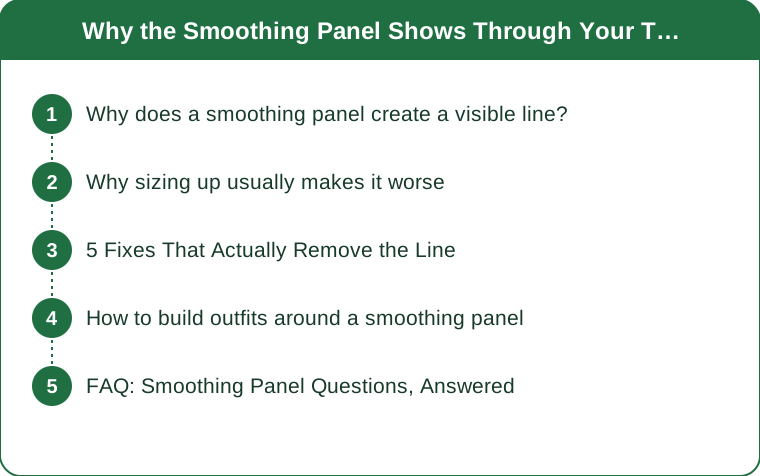
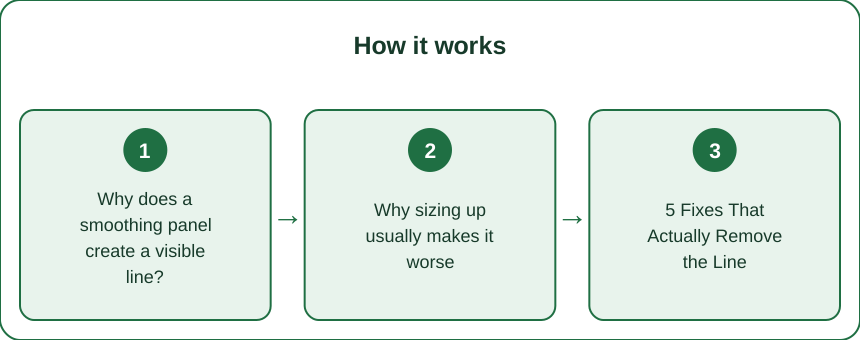
Why does a smoothing panel create a visible line?
Because it ends somewhere, and every ending is a step in thickness.
A smoothing panel is denser fabric, usually a double layer with a firmer knit. That construction is exactly what produces the smoothing effect, and it is also what makes it thicker than the fabric above it.
A thin top drapes over the step rather than absorbing it. Fine jersey follows the body closely enough to trace a two-millimetre change in thickness, which reads as a horizontal shadow line.
Light does the rest. Overhead light in a changing room or a flash in a photograph exaggerates any surface change, which is why the line looks far worse in pictures than in the mirror.
Panel edges vary hugely in how they finish. A bonded or laser-cut edge that tapers is nearly invisible. A stitched or elasticated edge that stops abruptly is the one you can see from across the room.
Compression pushes tissue up and down the edge. A firm panel creates a small amount of displacement at its boundary, which adds a real contour to the fabric step.
And the effect changes through the day. After a meal, or later in the evening, the pressure at the panel edge rises and the line becomes more pronounced.
Why sizing up usually makes it worse
It is the most common instinct and it addresses the wrong variable.
A larger size does not remove the layer. The panel is still double thickness; it is now just looser, so it sits less evenly and can wrinkle at the edge.
Loose smoothing fabric ripples. A firm panel needs a certain amount of tension to lie flat, and below that tension it produces small horizontal folds, which are more visible than a clean edge.
And the panel stops working. The smoothing effect depends on even compression. Undersized it digs; oversized it does nothing but add bulk.
The panel also migrates. A loose waistband rolls or slides down through the day, which moves the step to a new place and often to a less flattering one.
What actually helps is topography, not size. Change where the step falls and how the top interacts with it.
A useful test: put the leggings on and run a flat hand up from the hip. Where you feel the thickness change is where the line will fall. If that point sits exactly where your top clings most, that is the combination to avoid, whatever size you are wearing.
5 Fixes That Actually Remove the Line
Fix one: match the panel edge to the loosest part of the top. Most fine tees skim at the high waist and cling at the hip. A panel that ends high, under the ribcage, hides where the fabric is furthest from the body.
Fix two: choose a graduated panel. Some smoothing constructions taper in density rather than stopping. The step is spread over four or five centimetres instead of one, and the eye stops seeing it entirely.
Fix three: add a skimming layer, not a thicker one. A slightly textured or slubbed top disguises the step far better than a heavier smooth one, because texture breaks up the shadow.
Fix four: tuck rather than cover. Counterintuitively, a front tuck that sits above the panel edge removes the problem completely, because the top is no longer draped over the step at all.
Fix five: check it seated as well as standing. The line you cannot see standing often appears when you sit, because the panel compresses and the top pulls tight. Two seconds in a chair in the changing room saves an evening of adjusting.
And the one that surprises people: colour matters more than construction. A mid-tone top shows the shadow least; a pale, thin top in a matte finish shows it most, regardless of what is underneath.
How to build outfits around a smoothing panel
Six pairings that work rather than fight.
Fine ribbed knits over any panel. The vertical texture disrupts the horizontal shadow line more effectively than anything else in the wardrobe.
Longer, looser tees with a high-ending panel. The step sits under the ribs where the fabric is furthest from the body, and the hip is left clean.
Front-tucked tops with a high-rise panel. The tuck ends the fabric above the step entirely, which is the only fix that removes the geometry rather than disguising it.
Cropped tops with a low panel edge, if you prefer coverage lower. The rule is the same in reverse: never let the top’s tightest point sit on the panel’s edge.
Layered open shirts for photographs. A vertical open layer takes the eye off the horizontal line and is the reason so many outfit photos look smoother than the mirror suggested.
And a mid-tone rather than pale top when the light is overhead. Bright changing room lighting and pale matte jersey together will find any step in thickness that exists.
One practical check before buying: press the panel edge flat between two fingers. If you can feel a hard step, a thin top will show it. If it fades over a few centimetres, it will not.
FAQ: Smoothing Panel Questions, Answered
Why can I see my leggings waistband through my shirt?
Because the smoothing panel is a thicker double layer and it has to end somewhere. That ending is an abrupt change in thickness, and fine jersey drapes closely enough to trace it as a shadow. It is a construction feature, not a sizing error.
Will sizing up hide the line?
Usually not, and it often makes things worse. The layer is still there, just looser, so it ripples at the edge and the smoothing effect fades. Changing where the panel ends relative to your top does far more than changing the size.
What tops hide a smoothing panel best?
Fine ribbed or lightly textured knits in mid tones, worn skimming rather than clinging. Vertical texture breaks up the horizontal shadow, and a mid tone shows surface changes far less than a pale matte fabric under overhead light.
TL;DR:
- The line is a thickness step where the panel ends, not a fit fault.
- Sizing up keeps the step and loses the smoothing, so it rarely helps.
- Put the panel edge where your top is loosest, or tuck above it entirely.
- Ribbed or textured mid-tone tops disguise it best; pale matte jersey shows it most.
You are not looking for thicker fabric on top. You are looking for the step and the cling to happen in two different places.
See It in Motion
Seen here: High Waist 8” Yoga Shorts — shop similar styles on bubblelime.com
Keep Reading
This article is for general informational and styling purposes only. Fit, sizing, and product availability may vary.