Smoothing Panels and Meals: Why the Fit Changes After Lunch
Quick Answer: Digestion increases abdominal volume temporarily — gas, food, and fluid all take up space — which means a smoothing panel sized for a fasted stomach becomes noticeably tighter after a meal. This is normal physiology, not weight change. Choose for the whole day by sizing to afternoon comfort rather than morning, preferring a wide soft panel over a firm narrow one, and looking for crossover or V-front designs that lower the pressure point away from the stomach. If a panel causes reflux, breathlessness, or numbness, that is a sign to size up or wear something else.

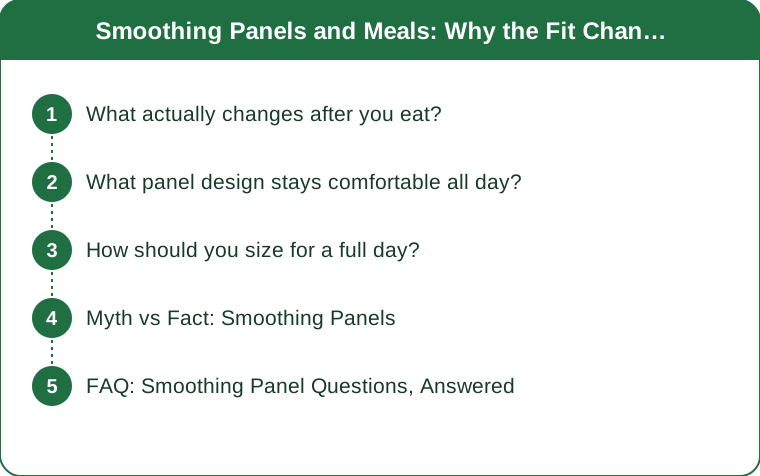
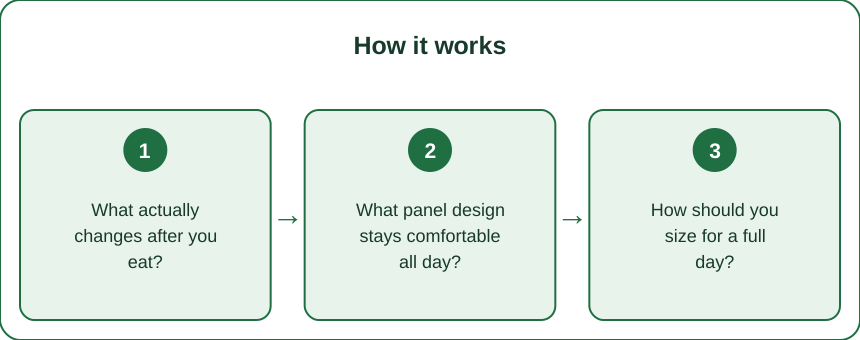
What actually changes after you eat?
Volume. A meal plus the fluid you drink with it occupies real space, and the digestive process produces gas as a normal byproduct. Combined, abdominal circumference can increase measurably within an hour or two of eating.
This is not fat, fluid retention in the medical sense, or anything abnormal. It is a container holding more than it was holding before.
Posture compounds it. After a meal people tend to sit, and sitting already reduces the distance between ribs and hips. A panel that had room standing on an empty stomach now has less space in both dimensions at once.
Timing varies. For most people the peak is one to three hours after eating, which unfortunately coincides with the afternoon stretch of a workday.
Certain foods produce more gas than others — high-fiber foods, carbonated drinks, and legumes among them — so the effect is not identical day to day.
The practical implication is straightforward: a garment fitted at your smallest point in the day will be tight for a meaningful portion of it. That is a sizing decision, and it is worth making deliberately rather than discovering repeatedly.
What panel design stays comfortable all day?
Width over firmness. A wide panel spreads pressure over a larger area, so the force per square inch is lower for the same amount of hold. A narrow, firm panel concentrates it into a band, and that band is what registers as discomfort.
A soft inner face. The panel is in continuous contact for hours. Surface comfort compounds over that time in a way it does not over twenty minutes.
Crossover or V-front construction. These lower the center front while keeping side support, which moves the pressure away from the stomach. Many people find this the single most comfortable design after eating.
Single-layer smoothing rather than a bonded double panel. A double-layer panel is firmer and does hold more, but it has essentially no give when volume increases.
Good recovery, not maximum compression. A panel with high recovery holds its position without needing to be tight. A low-recovery panel has to start tighter to do the same job, and it slides once it stretches.
Avoid internal drawcords or a hard elastic top edge. Both create a defined pressure line right at the point that changes most.
What is worth knowing: smoothing panels are about surface smoothness, not shaping. A panel that presses harder does not reshape anything meaningfully — it just presses harder.

How should you size for a full day?
Try them on in the afternoon, after eating, ideally sitting. This is the harder test and the realistic one. A morning fitting-room session on an empty stomach is the least representative moment of your day.
Sit for a full minute and take a deep breath. If the panel resists your ribcage expanding, it will be uncomfortable for hours.
Size for the tighter moment, not the looser one. If you are between sizes, the larger one is usually correct for all-day wear. A panel that is slightly relaxed in the morning is unremarkable; one that is tight in the afternoon is all you will think about.
Consider owning two. A firmer pair for short wear — a couple of hours, a specific outfit — and a softer wide-panel pair for full days. This is a common and sensible split.
Watch how it behaves during your normal day, not during exercise. Smoothing panels are usually bought for daily wear, and daily wear involves sitting, eating, and driving far more than moving.
And the health note, which matters here: persistent bloating that is new, painful, or accompanied by other symptoms is worth discussing with a clinician rather than sizing your clothing around. Compression garments can also worsen reflux in people prone to it. This is general information, not medical advice.
Myth vs Fact: Smoothing Panels
Myth: A tighter panel gives a better result. Fact: Past a modest amount of compression, additional tightness produces bulging above and below the panel rather than a smoother line. Width and placement do more than force.
Myth: Post-meal tightness means you sized wrong. Fact: It means you sized for a fasted stomach. Everyone’s abdominal volume changes after eating — the garment should accommodate the range, not the minimum.
Myth: Smoothing panels train or shape the midsection over time. Fact: They do not. Any effect is present while worn and gone when removed. Garments do not remodel tissue.
Myth: High-rise and smoothing are the same thing. Fact: High-rise describes where the waistband sits. Smoothing describes a panel with additional structure. Plenty of high-rise leggings have no smoothing panel at all.
Myth: They are uncomfortable by nature. Fact: A wide, soft, correctly sized panel is unremarkable to wear. The discomfort people describe almost always traces to a narrow firm panel or a size too small.
FAQ: Smoothing Panel Questions, Answered
Can I wear these for exercise?
For walking and low-impact work, yes. For anything requiring full breathing capacity — running, intervals, heavy lifting — a compressive abdominal panel works against you. Use a standard high-rise for those.
Do they cause any harm?
Correctly sized, no. Too tight and worn for long periods, compressive garments can contribute to reflux and, rarely, nerve irritation at the hip. Numbness, tingling, or persistent pain means stop wearing them and, if it continues, see a clinician.
Why does the panel roll down after a few hours?
Usually the panel is under too much tension at its top edge, or the fabric has lost recovery. Both are addressed by a wider panel or a larger size — not by pulling it back up repeatedly.
Is there a version that works after a big meal specifically?
Crossover and V-front designs consistently perform best for this, because the lowest-pressure point of the garment sits exactly where the volume increases.
TL;DR:
- Abdominal volume genuinely increases after eating — the fit change is physiology, not sizing failure.
- Choose wide and soft over narrow and firm; width spreads pressure that firmness concentrates.
- Crossover and V-front panels move pressure away from the stomach and handle meals best.
- Try them on in the afternoon, seated, and take a deep breath before buying.
- Between sizes, go up for all-day wear.
Smoothing panels are for surface smoothness, not shaping. Sized for the fuller part of your day, they are comfortable — and sized for the emptiest, they never will be.
See It in Motion
Seen here: High Waist Yoga Leggings with Inner Pocket — shop it on bubblelime.com
Keep Reading
This article is for general informational and styling purposes only. Fit, sizing, and product availability may vary.