Why Smoothing Leggings Feel Different in the Morning Than the Evening
Quick Answer: Your body measurably changes shape over a day - fluid shifts downward with gravity, your midsection expands with food and digestion, and fabric relaxes with body heat and wear. A smoothing panel sits exactly where those changes are largest, so it registers all of them. The leggings are not shrinking. You are being measured continuously by a garment designed to hold a shape.
Morning fit is not the real fit.
Evening fit is not the real fit either. There is no single real fit, which is the part nobody mentions.

What actually changes between morning and evening?
Three separate things, moving in different directions.
Your midsection expands through the day, and food is only part of it. Digestion produces gas and volume, and the effect accumulates across meals rather than resetting between them. Late afternoon is peak circumference for most people, which is exactly when the smoothing panel starts announcing itself.
Fluid moves downward with gravity. After a day upright, more fluid sits in your lower legs and less in your upper body, which is why ankles feel tighter in the evening and rings feel looser. Your leggings are reporting a genuine redistribution, not imagining one.
The fabric itself relaxes with heat and wear. Elastane recovers less as it warms against your body and as the garment is worn through the day. Most leggings are slightly looser in the leg by evening while feeling tighter in the waist - which sounds contradictory until you separate the two mechanisms.
Salt and heat amplify all of it. A salty lunch or a hot day increases fluid retention noticeably. In late summer, this is a bigger factor than most people credit - the same pair genuinely fits differently in August than in November.
Your posture changes too. A day of sitting produces a different midsection presentation than a morning standing at a mirror. The panel sits differently when you sit than when you stand, and evening involves far more sitting.
And the cycle matters. Fluid retention varies across the menstrual cycle in a way that can exceed all of the above combined. A pair that fits every day of the month is a pair with room built in.
How should you size for a body that changes?
Size for your evening, not your morning, and check the fit sitting down.
Try leggings on in the afternoon or evening if you can. Morning fitting rooms produce a size that works for two hours a day. The evening version of you is the harder case, so fit for that one.
Always sit down before deciding. Standing fit tells you almost nothing about how a high waistband behaves when you fold at the hip. Sit, then breathe in fully - if either is uncomfortable, it is the wrong size or the wrong rise.
Check the waistband for digging, not just for tightness. A band that leaves a deep mark after a few minutes of sitting will be genuinely unpleasant by evening. A wide band distributes pressure far better than a narrow one at the same tension.
Watch the rise relative to your natural waist. A super high rise that sits above the narrowest point pushes against the ribs when you sit and eat. A rise that sits at or just above your natural waist is far more tolerant of daily change.
Do not size up to solve a rise problem. A too-large pair in the wrong rise slides down and rolls, which is worse than a snug pair in the right one. Rise and size are separate problems and mixing them creates a third.
And keep two options if your days differ. A firmer pair for short outings and a gentler pair for long days is not indulgence, it is recognising that one garment cannot cover a twelve-hour range. Most people already do this with jeans without thinking about it.

What if a pair only fails in the evening?
That is usually fixable without replacing anything.
Wash it properly and let it recover. Elastane recovers with rest and with a cool wash and air dry. Heat is what kills recovery - a tumble dryer permanently degrades the stretch that lets a panel spring back.
Rotate rather than wearing the same pair on consecutive days. Fibres need time to return to shape, and a day off restores noticeably more than an hour off. Consecutive wears are why a favourite pair goes baggy first.
Fold the waistband down for the last hours if it is a rise issue. Not elegant, entirely effective, and a signal that the next pair should sit lower. Comfort beats theory.
Check whether it is the panel or the seam. A smoothing panel that feels fine but a seam that digs is a construction problem, not a sizing one. Flat or bonded seams behave far better across a long day.
Consider what you ate and how much you walked. A day of standing, a salty meal, and warm weather can shift things enough to change a size in perception. Before blaming the garment, check the day.
And if a pair leaves lasting marks, restricts breathing, or causes numbness or tingling, stop wearing it. Persistent compression discomfort is not something to adapt to. That combination is worth a conversation with a doctor rather than a smaller size. This is general information, not medical advice.
Myth vs Fact: Smoothing Leggings Beliefs
Myth: if they feel tight by evening, they shrank in the wash. Fact: quality knits rarely shrink meaningfully, and the evening change is almost entirely your body and the day. Same garment, different measurement.
Myth: tighter smooths better. Fact: past a point, extra compression creates a hard edge and pushes volume above and below the panel rather than smoothing it. A correctly sized panel outperforms an oversized-compression one every time.
Myth: high rise always smooths more than mid rise. Fact: what matters is where the rise sits relative to your torso, not the number on the label. A high rise on a shorter torso becomes a rib-cage problem, and rib pressure is not smoothing.
Myth: a smoothing panel should be invisible under everything. Fact: the panel edge shows most under thin, clingy, light-coloured fabric regardless of quality. Fabric of the top matters as much as the leggings.
Myth: sizing down gives a sleeker line. Fact: sizing down usually produces rolling at the waistband and a visible band line at the thigh. A smooth line requires the correct size, not a smaller one.
Myth: they will stretch out to fit. Fact: a pair that is too small stretches thin, goes semi-sheer under load, and recovers badly. It gets worse, not better.
FAQ: Fit Change Questions, Answered
Should I buy for morning fit or evening fit?
Evening, without much doubt. The evening version has to be wearable or you will stop reaching for them - and a slightly relaxed morning fit is barely noticeable by comparison.
Why do they feel looser at the ankle but tighter at the waist by evening?
Two separate mechanisms working in opposite directions: fabric relaxing with body heat in the leg, and your midsection expanding with digestion. Both are normal and both are strongest at the end of the day.
Does a wide waistband really help?
Yes, meaningfully. A wider band spreads the same holding force over more surface, so the pressure at any one point is lower. Wide bands are the single most reliable comfort feature on a high rise pair.
TL;DR:
- Your midsection expands and fluid shifts downward through the day - the panel sits where the change is largest.
- Fabric relaxes with body heat, so legs loosen while the waist tightens. Both are normal.
- Fit in the afternoon and always check sitting down, breathing in fully before you decide.
- Rise matters more than size for evening comfort - a wide band beats a narrow one at the same tension.
- Cool wash, air dry, and rotate pairs to protect the recovery that makes a panel spring back.
Next time you try a pair on, sit down for a full minute before deciding. That single minute predicts your evening far better than the mirror does.
See It in Motion
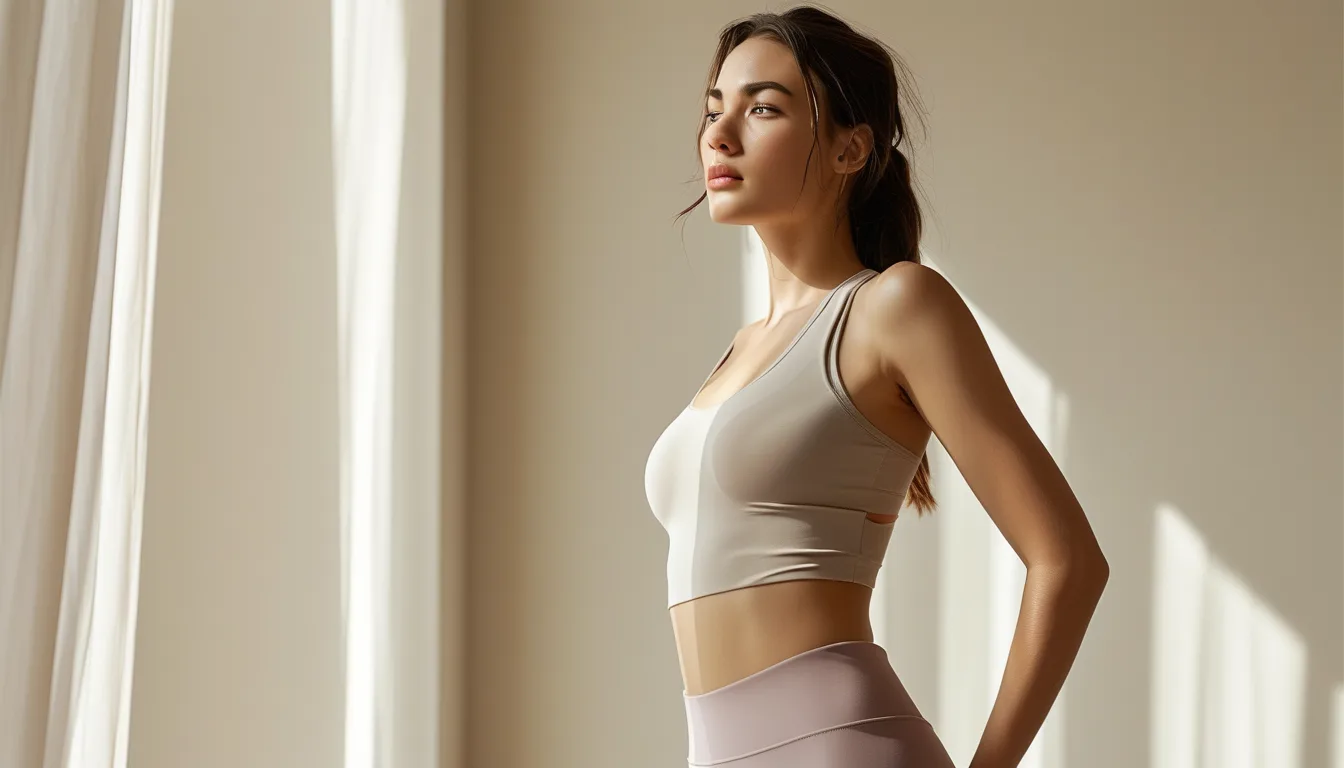
Seen here: High Waist Embossed Yoga Leggings with Side Pockets — shop it on bubblelime.com
Keep Reading
This article is for general informational and styling purposes only. Fit, sizing, and product availability may vary.