Why Your High-Rise Waistband Rolls Down, and How to Make It Stop
Quick Answer: A high-rise waistband rolls down when the band is fighting your shape instead of resting on it — usually because the size is too small, the rise is the wrong length for your torso, the elastic has aged, or the band is narrow and stiff enough to fold at the point of most pressure. The fix is almost never sizing down or yanking it higher. It is matching rise to torso, choosing a wide soft band with real recovery, and keeping heat away from the elastane that holds it all together.
The band is not misbehaving. It is reporting a mismatch.

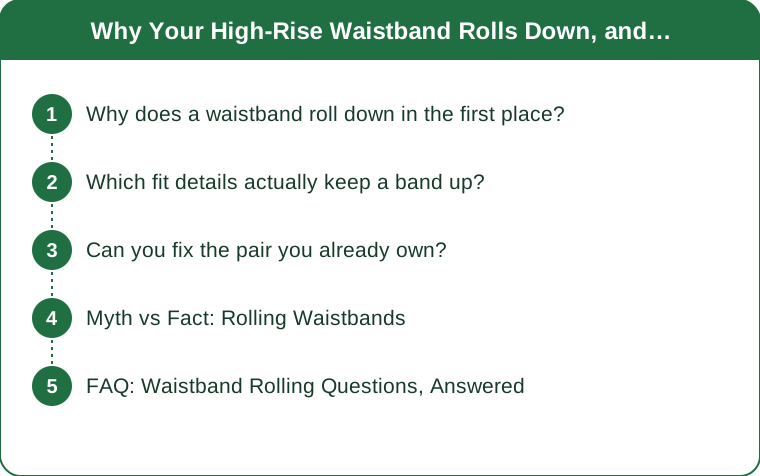
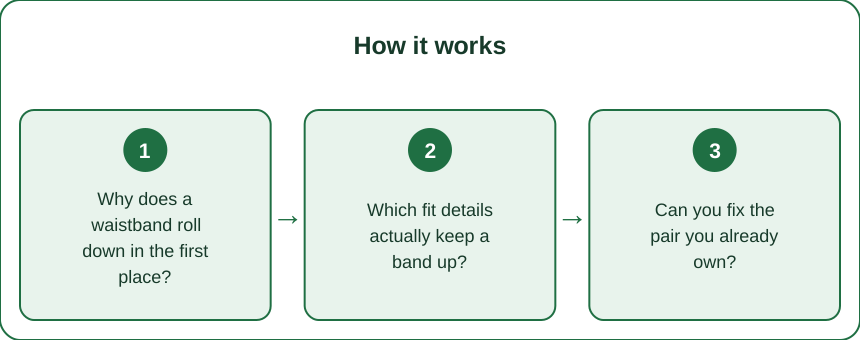
Why does a waistband roll down in the first place?
Because fabric under uneven tension folds at the weakest line — and the top edge of a band is always that line.
A waistband spans a curved, moving surface. Your waist changes shape when you sit, bend, and breathe. The band has to stretch over the widest point it crosses and stay put on the narrower zones above and below. Wherever pressure changes sharply, the top edge gets pushed outward — and an edge pushed outward folds.
Too small is the most common cause, and it is the opposite of what most people guess. A band stretched near its limit has enormous rolling force stored in it. The moment you sit, the fabric finds relief the only way it can: by folding over itself. A size down does not smooth more; it rolls more.
Wrong rise is the second cause. If the rise is longer than your torso, the band lands on your ribs, where breathing constantly changes the circumference underneath it. If the rise is shorter than your proportions, the band sits exactly on the widest part of your middle — the one place a band cannot anchor. Rolling at the navel line almost always means a rise-length mismatch, not a size problem.
Aged elastic rolls no matter what. Elastane fibers break down with heat and time. A pair of high-waisted leggings that stayed up for two years and now rolls has not changed fit — it has lost recovery, usually in the dryer.
Sitting posture finishes the job. A deep couch slouch folds any band. If rolling only happens in the car or at a desk, the band is marginal and the posture is the trigger.
Which fit details actually keep a band up?
Width, softness, rise match, and recovery. In that order.
A wide band beats a narrow one every time. Width spreads pressure over more surface, so no single line bears enough force to fold. The difference between a 1.5-inch band and a 4-inch band on the same body is the difference between rolling by lunch and forgetting you are wearing them.
Soft with strong recovery beats stiff. A thick, rigid band feels secure in the fitting room and then fights every sit. What you want is a band that stretches easily and snaps back completely — check the elastane content, and check how the band behaves after you stretch it hard in your hands. Slow, saggy return in the store means rolling at home.
Match the rise to your torso, not to the label. Rise lengths vary by well over two inches between brands using the same words. The band should land on the narrower zone just above your natural waist crease — above the widest point, below the ribs. If you are long-torsoed, many high rises are functionally mid-rise on you and will sit exactly where they roll.
Bonded or clean-finished top edges resist folding better than a folded-and-stitched channel, because there is no ridge to catch and flip.
A drawcord is insurance, not a crutch. On smooth-fabric styles, a light internal drawcord keeps the band anchored through workouts without changing how it looks.
Buy the size the band likes, not the size the mirror votes for in ten seconds. In well-cut buttery-soft leggings, the correct size smooths by resting evenly; the too-small size smooths for a minute and then rolls, digs, and creates the exact line it was supposed to prevent.

Can you fix the pair you already own?
Often, partly. Here is the honest triage.
First, diagnose which problem you have. Roll at the ribs: rise too long — wear the band folded once, deliberately and evenly, or accept this pair as a low-rise. Roll at the navel: rise too short for your torso — styling can help, replacement fixes. Roll only after hours of sitting: marginal size or aging elastic. Roll immediately on any sit: size too small, and no trick survives that.
Rescue the elastic you have left. Wash cold, skip the dryer forever, and keep the band away from radiators and hot cars. Heat is the main killer of elastane, and a band that still has some recovery keeps it years longer once the dryer is out of its life.
Strip residue if the fabric feels coated. Softener and detergent buildup make fabric heavier and slicker, which helps gravity win. A residue-free wash restores some grip between band and skin.
Use layers as anchors. A fitted tank tucked under the band changes the friction surface from skin to fabric and quietly stabilizes a marginal band for a workday.
Adjust the sit, not just the pants. Scooting your hips to the chair back so your torso stays long removes the deep fold that triggers most desk-hour rolling.
And retire the pair that has earned it. A band that rolls instantly, everywhere, after years of service is not a puzzle. Elastic is a consumable. The replacement pair — right rise, wide soft band, one honest size — is the actual fix, and it is worth trying on seated, not just standing.
Myth vs Fact: Rolling Waistbands
Myth: Rolling means you need a smaller size. Fact: Almost always the reverse. A smaller band stores more fold force and rolls faster. If the band digs and then rolls, the size is too small, not too large.
Myth: Tighter always means smoother. Fact: Excess compression displaces softness above the band edge, creating a fold line and a bulge the right size would never produce. Even pressure smooths; maximum pressure sculpts problems.
Myth: All high-rise cuts fit the same. Fact: Rise length varies more than two inches across brands. The same body can be perfectly served by one high rise and rolled out of another by dinner.
Myth: Rolling means your body is the wrong shape for high rises. Fact: Rolling means that band is the wrong geometry for your torso. Long torsos need longer rises; shorter torsos need bands that end below the ribs. The shape is fine; the equation was wrong.
Myth: A rolled band just needs pulling up higher. Fact: Pulling a mismatched band higher increases the tension that causes the fold. It buys minutes and worsens the mechanism.
FAQ: Waistband Rolling Questions, Answered
Why do my leggings only roll when I sit down?
Sitting shortens your torso and increases pressure at the band’s top edge. If rolling is sit-only, the pair is marginal — a slightly bigger size, a taller or wider band, or a once-folded wear usually resolves it.
Do wide waistbands really stay up better?
Yes, consistently. Width distributes pressure so no single line carries enough force to fold, and it gives the band more surface to grip. It is the single most reliable anti-roll feature you can buy.
Why did a pair that never rolled start rolling this year?
Elastane fatigue. Heat from dryers and hot washes breaks down the recovery fibers, and a band without recovery cannot hold tension against your movement. Cold wash and air drying slow the decline dramatically.
Should the band sit at my natural waist or above it?
Just above the natural waist crease, on the zone that is narrower than what is below it — that geometry is what anchors a band. On the widest point itself, or up on the ribs, every band eventually slides toward a fold.
TL;DR:
- Bands roll where pressure changes sharply: too-small sizing, mismatched rise length, narrow stiff bands, and dead elastic are the four causes.
- Sizing down makes rolling worse, not better; a wide, soft band in an honest size stays put longest.
- Match rise to your torso — rolling at the ribs means too long, at the navel means too short.
- Protect elastane from heat: cold washes and air drying keep a good band good for years.
Try your most-worn pair seated in front of a mirror tonight. Where it folds tells you exactly what to buy next time.
See It in Motion
Seen here: High Waist Yoga Leggings with Side Pockets — shop it on bubblelime.com
Keep Reading
This article is for general informational and styling purposes only. Fit, sizing, and product availability may vary.